
 ×
MiniCart
Your cart is currently empty.
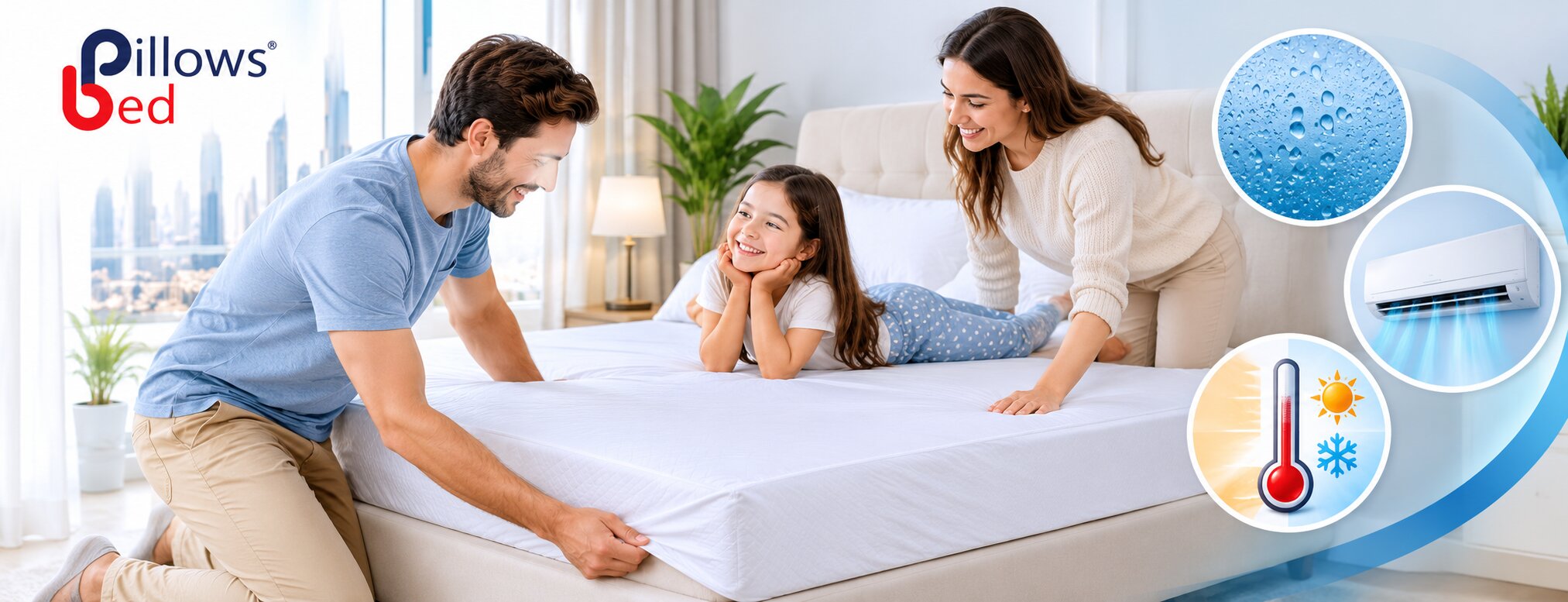
The UAE's climate can have a noticeable effect on bedding, particularly when indoor and outdoor conditions differ throughout the day. High humidity, intense outdoor heat and continuous air conditioning can influence how mattresses retain moisture, develop odours and withstand everyday use. These factors make choosing the right mattress cover in UAE an important consideration for maintaining mattress hygiene and durability. While most people focus on mattress comfort and firmness, the protective layer placed over it also deserves attention. A suitable cover helps limit exposure to sweat, accidental spills, dust and other contaminants without compromising sleeping comfort.
Mattresses are exposed to more than just body weight and daily use. Environmental conditions can influence the materials inside them, particularly when moisture and temperature fluctuate.
Three climate-related factors deserve attention:
High humidity: Moisture in the surrounding air can contribute to dampness, particularly in poorly ventilated bedrooms.
Outdoor heat: Warm conditions can increase perspiration, leaving moisture on bedding and mattress surfaces.
Indoor cooling: Air conditioning creates cooler indoor environments, sometimes producing noticeable temperature differences between indoor and outdoor spaces.
Although air conditioning helps maintain comfortable sleeping conditions, it does not automatically eliminate moisture from bedding. Regular cleaning and suitable mattress protection remain important.
Humidity is an important consideration in the UAE, especially during warmer months. When indoor moisture levels remain high, mattresses may take longer to release accumulated moisture from perspiration and other sources.
Over time, inadequate ventilation and trapped moisture can contribute to unpleasant smells and less hygienic sleeping conditions.
A few practical precautions can help:
Allow bedding to air out regularly rather than making the bed immediately after waking.
Wash bed sheets and pillowcases according to their care instructions.
Avoid placing mattresses directly against damp walls.
Keep bedroom ventilation and air conditioning systems properly maintained.
Use a breathable mattress cover that does not unnecessarily trap heat.
A waterproof mattress protector can provide an additional barrier against accidental liquid spills and perspiration, helping prevent moisture from reaching the mattress itself.
Air conditioning is widely used in UAE households to maintain comfortable indoor temperatures. However, the difference between outdoor heat and indoor cooling can influence the sleeping environment.
For example, a bedroom may remain cool throughout the night while the surrounding outdoor temperature rises considerably during the day. These changing conditions can affect how bedding feels and how quickly moisture evaporates.
Mattress materials also respond differently to temperature changes. Memory foam, for instance, can feel firmer in cooler conditions and softer in warmer environments.
To maintain comfortable bedding:
Choose mattress covers made from materials suitable for regular use in air-conditioned rooms.
Avoid excessively thick protective layers if they make the sleeping surface uncomfortable.
Wash and dry removable covers thoroughly before putting them back on the mattress.
Maintain a consistent indoor temperature whenever practical.
The right protective layer should complement the mattress rather than interfere with its natural comfort and support.
Not all mattress covers offer the same level of protection. Their construction, fabric composition and surface finish determine how they perform during everyday use.
When selecting a mattress cover in UAE, consider the following material characteristics:
Breathability: Fabrics that allow adequate airflow can help maintain a comfortable sleeping surface.
Water resistance: Protective layers with water-resistant backing can limit liquid penetration during accidental spills.
Softness: The upper fabric should feel comfortable against the bed sheet and should not create unnecessary friction.
Washability: Removable, machine-washable designs make routine cleaning easier.
Durability: Strong stitching, reliable elastic edges and quality materials help the cover withstand repeated use.
A good protective cover should offer a sensible balance between moisture resistance, comfort and ease of maintenance.
Different households have different mattress protection requirements. A family with young children may prioritise spill resistance, while someone living alone may prefer a lightweight, easy-to-wash option.
Here are some practical considerations:
Families with children: Waterproof surfaces can help manage accidental spills, food stains and everyday mess.
People with allergies: Regular washing and appropriate protective barriers can help reduce exposure to accumulated dust and allergens.
Guest bedrooms: Lightweight, washable covers are useful for mattresses that are not used every day.
Master bedrooms: Soft, breathable materials can provide protection without changing the overall sleeping experience.
Rental properties: Durable covers can help maintain mattress condition between different occupants.
For households looking for a bed protector in Dubai, checking mattress dimensions is particularly important. A cover that is too loose may shift during sleep, while an undersized one may not provide adequate coverage.
Waterproofing is one of the most useful features in modern mattress protection. However, the term does not necessarily mean that every product offers complete enclosure or identical moisture resistance.
Some covers have waterproof backing on the sleeping surface, while others include zippered designs that enclose the mattress from multiple sides.
Before purchasing, check:
Whether the waterproof layer covers the entire sleeping surface.
Whether the sides and underside also offer protection.
Whether the material allows sufficient airflow.
Whether the cover can be removed and washed easily.
Whether the product is suitable for the mattress thickness.
A premium mattress cover should combine reliable construction with practical features that support regular household use.
Mattresses can collect dust particles, skin flakes, hair and other household contaminants over time. These materials may accumulate even when bed sheets are changed frequently.
People sensitive to dust may benefit from a more consistent mattress cleaning routine.
Useful practices include:
Washing sheets and pillowcases regularly.
Vacuuming the mattress surface using an appropriate attachment.
Keeping pets away from the sleeping surface when possible.
Avoiding excessive moisture during mattress cleaning.
Selecting washable protective covers.
An anti-allergy mattress protector can offer an additional physical barrier against certain allergens, depending on its construction. However, it should complement regular cleaning rather than replace it.
Protecting a mattress requires more than purchasing a suitable cover. Consistent maintenance plays an equally important role.
A simple routine can make a noticeable difference:
Frequency | Mattress care activity |
Daily | Allow bedding to air before making the bed |
Weekly | Change and wash bed sheets |
Monthly | Inspect the mattress and protective cover |
As needed | Clean spills immediately and dry the affected area |
According to care label | Wash the mattress cover and allow it to dry completely |
These small habits support better hygiene and help prevent avoidable mattress damage.
At Bed and Pillows, we offer thoughtfully designed mattress protectors and covers to support effective mattress protection in UAE homes. Our collection includes waterproof protectors, breathable fabric options, zippered covers and washable designs in multiple sizes. Explore our range and let us help you maintain a cleaner, fresher and more comfortable sleeping environment throughout the year.
Humidity, air conditioning and temperature fluctuations are important considerations when maintaining mattresses in the UAE. Although these environmental factors cannot be avoided entirely, their effects can be managed through appropriate bedding choices and regular maintenance. Choosing the right mattress cover in UAE helps create a protective barrier against spills, perspiration, dust and everyday wear. Paying attention to breathability, waterproofing, material quality and correct sizing can also make a difference. With suitable mattress protection in UAE and a consistent cleaning routine, households can maintain cleaner sleeping surfaces and preserve their mattresses for longer.
1. How does humidity affect mattresses in the UAE?
High humidity can slow moisture evaporation, potentially contributing to dampness, unpleasant odours and poor mattress hygiene.
2. Can air conditioning cause moisture problems in mattresses?
Air conditioning does not directly cause mattress moisture problems, but perspiration and inadequate ventilation can allow moisture to accumulate.
3. Why should I use a mattress cover in the UAE?
A mattress cover helps protect against spills, sweat, dust and everyday wear, supporting better mattress hygiene and durability.
4. Are waterproof mattress protectors suitable for hot climates?
Yes. Choose options with breathable upper fabrics and comfortable construction to balance moisture protection and sleeping comfort.
5. How often should I wash my mattress protector?
Generally, washing every one to two months is reasonable, although spills, allergies and manufacturer instructions may require more frequent cleaning.
6. Can mattress protectors help reduce dust allergies?
Certain protective covers can create a barrier against dust and allergens. Regular washing and bedroom cleaning are also important.
7. How can I prevent moisture from accumulating in my mattress?
Air out your bedding regularly, maintain proper ventilation, wash protective covers periodically and ensure everything is completely dry before reuse.

